In 1876, a twenty-year-old named Yokichi Tatara began trading local produce — rice, barley, and, most notably, the hand-rolled tea that farmers in his village of Wada, Yaizu, were beginning to cultivate in earnest. That tea travelled from his hands, through the port of Shimizu, across the Pacific, and into the trading houses of America. One hundred and fifty years later, it is travelling again.
Yokichi Tatara was born in 1855 in Wada village, on the outskirts of what is today Yaizu City. He was twenty years old when, in the ninth year of the Meiji era, he began the business that would eventually become Nagamine Seicha — then an unassuming trade in the goods his neighbours grew: rice, barley, seasonal produce, and the tea that each household was hand-rolling with growing ambition.
Shizuoka tea, at that moment, was finding its voice. Farmers were refining their methods, and merchants in the newly opened treaty port of Yokohama were sending this tea onward — in the form of large, hand-fired baskets — to the tables of America. Yokichi shipped from Shimizu to those Yokohama trading houses. For the next half-century, his business travelled to English-speaking cities he would never see.
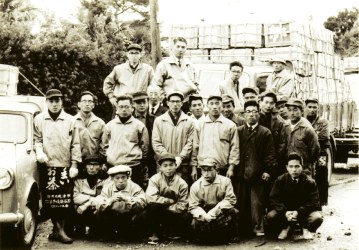
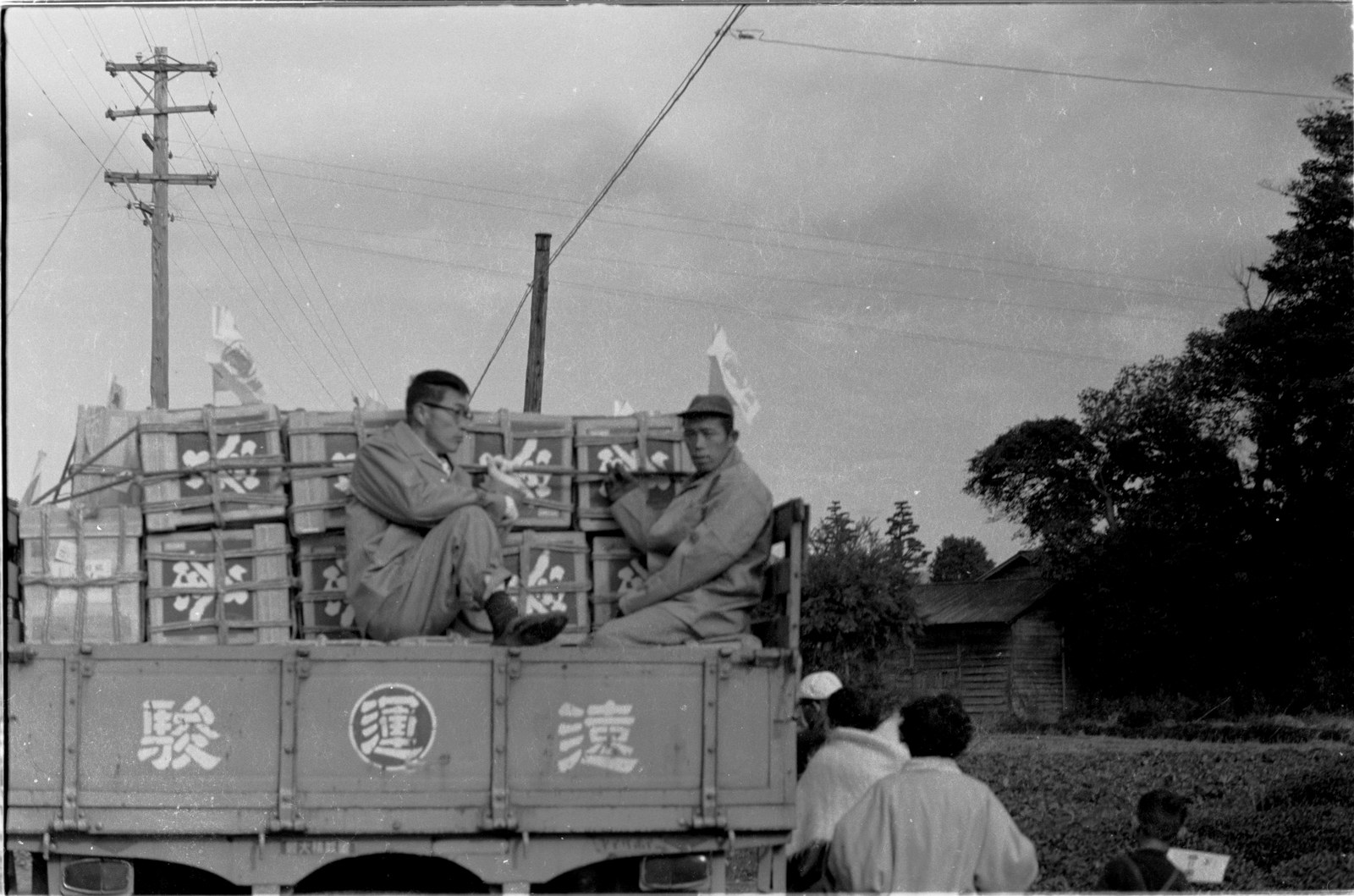
In January 1951 the family business was formally incorporated as Tatara Seicha Kojo K.K. — Tatara Tea Factory Company. By then, Japan’s tea export trade to America had sharply declined, and the company’s second and third generations had already pivoted toward domestic wholesale. Through the 1950s and ’60s, our trucks carried tea under the Tatara mark to retailers throughout Tokyo, Kanagawa, and beyond.
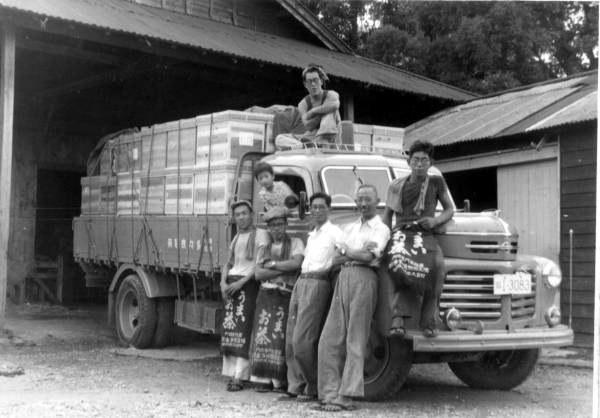
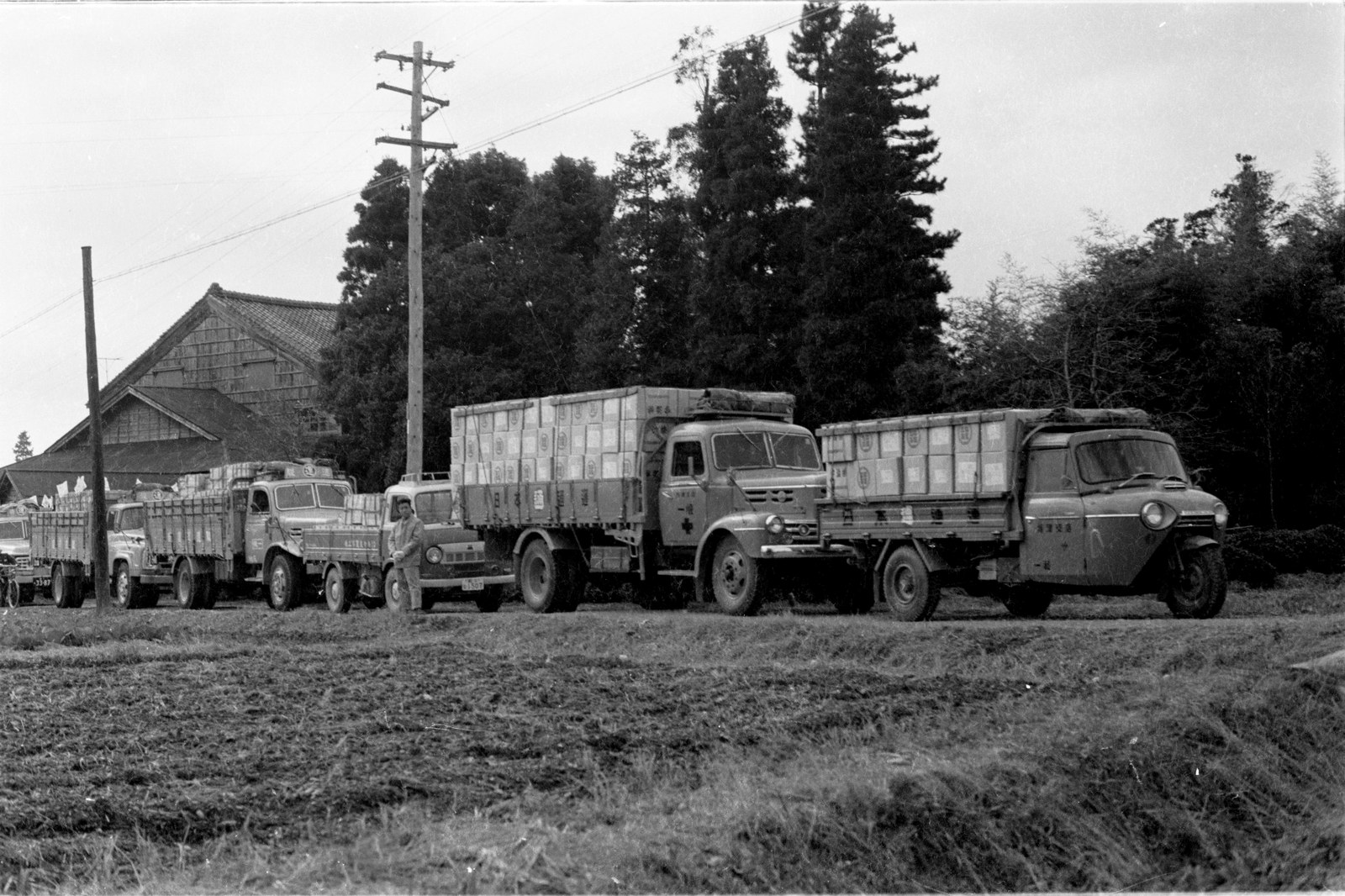
The photographs from this era are remarkably direct. Staff standing before their delivery trucks in signature hanten aprons carrying the words umai ocha — “delicious tea” — in bold gold script. A new year’s procession of six trucks laden with tea chests, on the occasion of hatsuni, the ceremonial first shipment of the year. This was a tea merchant of its time: serious about provenance, devoted to wholesale, proud of its work.
In April 1977 we changed our trading name to Nagamine Seicha K.K. The change reflected a formal business and capital alliance with a Tokyo partner, and an ambition to modernise the way tea reached consumers in the two great cities of the east — Tokyo and Yokohama. New offices opened in Chiyoda, Shinbashi, and Shinjuku. Direct-to-consumer retail stores opened in Yokohama and Tokyo. Our online shop followed in 1999, and remains in continuous operation to this day.
The master blender in our factory began entering prefectural competitions, and winning them. Three Highest Gold Prizes at the Shizuoka Tea Refining Competition. The Minister of Agriculture, Forestry and Fisheries Award in 2010, followed by nine consecutive years of prefectural awards. The craft in our finishing room quietly became a matter of public record.
Nagamine Seicha began as an export business. For a hundred years, that founding orientation quietly receded — our tea travelled instead to the counters of eight directly operated stores, to tens of thousands of online customers across Japan, to the cafés and restaurants we serve under Tokyo and Kanagawa contracts.
And then, in recent years, the tide turned again. The world began to ask for Japanese matcha the way it once asked for basket-fired sencha. What some have briefly called a matcha bubble has proven to be something larger — a durable and discerning international appetite for single-producer ceremonial tea from the Shizuoka region.
In our 150th year, we are returning to the work our founder set out to do: preparing tea, in the seriousness our house has always demanded, for tables on the other side of the sea. The selections in our 2026 matcha lineup are the first chapter of this new export era. The next generation of our house is already at work with the growers whose tea we bring to you.
Head office and manufacturing in Yaizu. Eight directly operated stores across three prefectures. A domestic retail base that keeps us in constant dialogue with end customers — feedback that informs every wholesale selection we offer to partners abroad.
45 Isshiki, Yaizu-shi, Shizuoka 425-0011. All wholesale and export operations.
Our largest retail location with a direct-to-consumer tea shop and café. Home of the famed Muse Matcha soft-serve.
Operating in the Tabata neighborhood of Tokyo since 1982 — now in its fourth decade.
Our first directly operated retail location, opened 1974.
Eight directly operated stores total. For retail inquiries, please visit nagamine.jp.