Wild & Restored · Mount Takakusa · Yaizu

An abandoned hillside.

Brought back.

Wild tea, restored fields.

Two abandoned hillside fields on Mount Takakusa, above Yaizu — brought back to cultivation by a tea merchant from below, without pesticide or fertiliser. Yabukita black tea, native-cultivar tea over a hundred and forty years old, and traditionally steamed autumn bancha.

高草山 · 笛吹段公園前 · 自然栽培
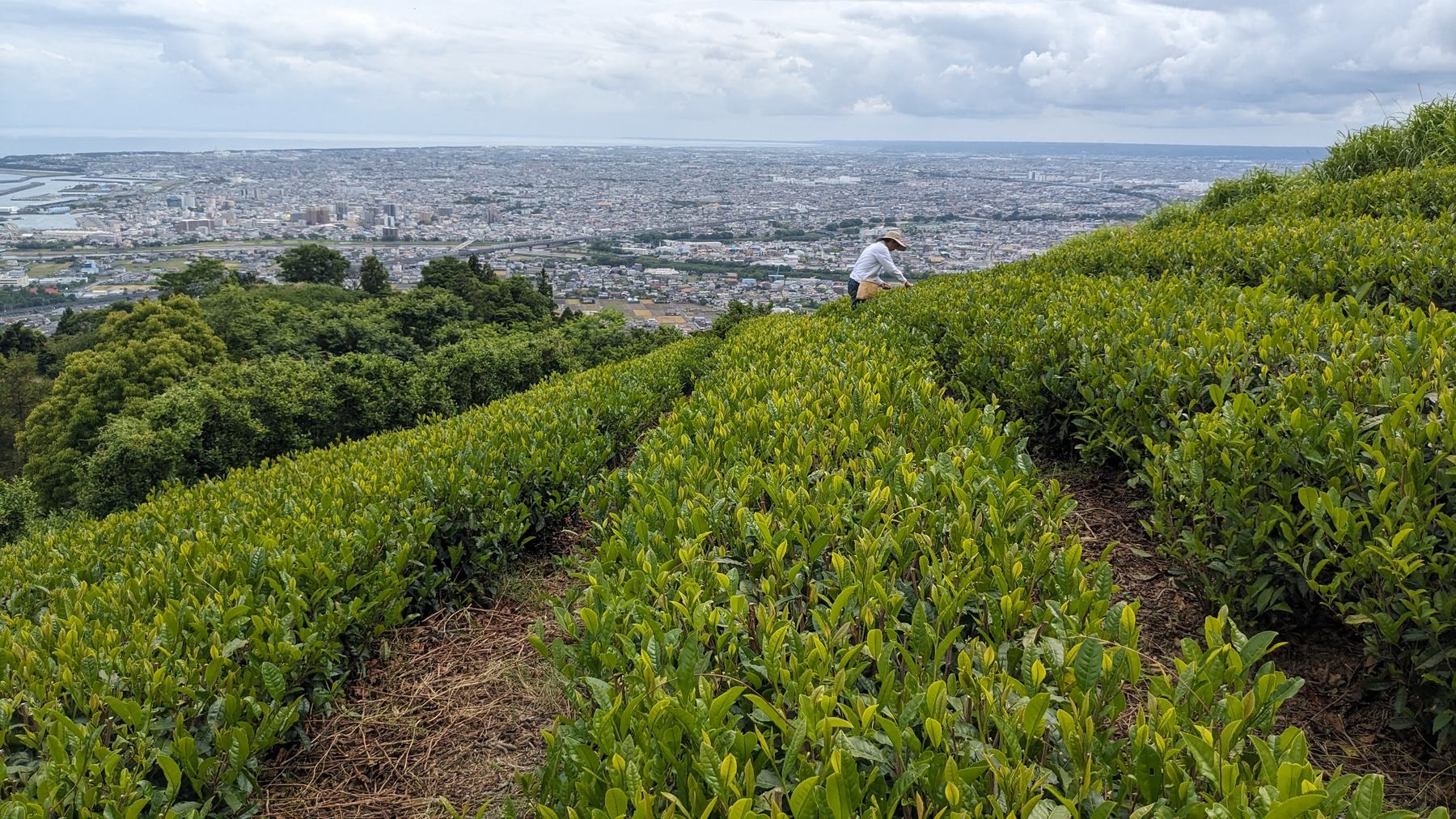
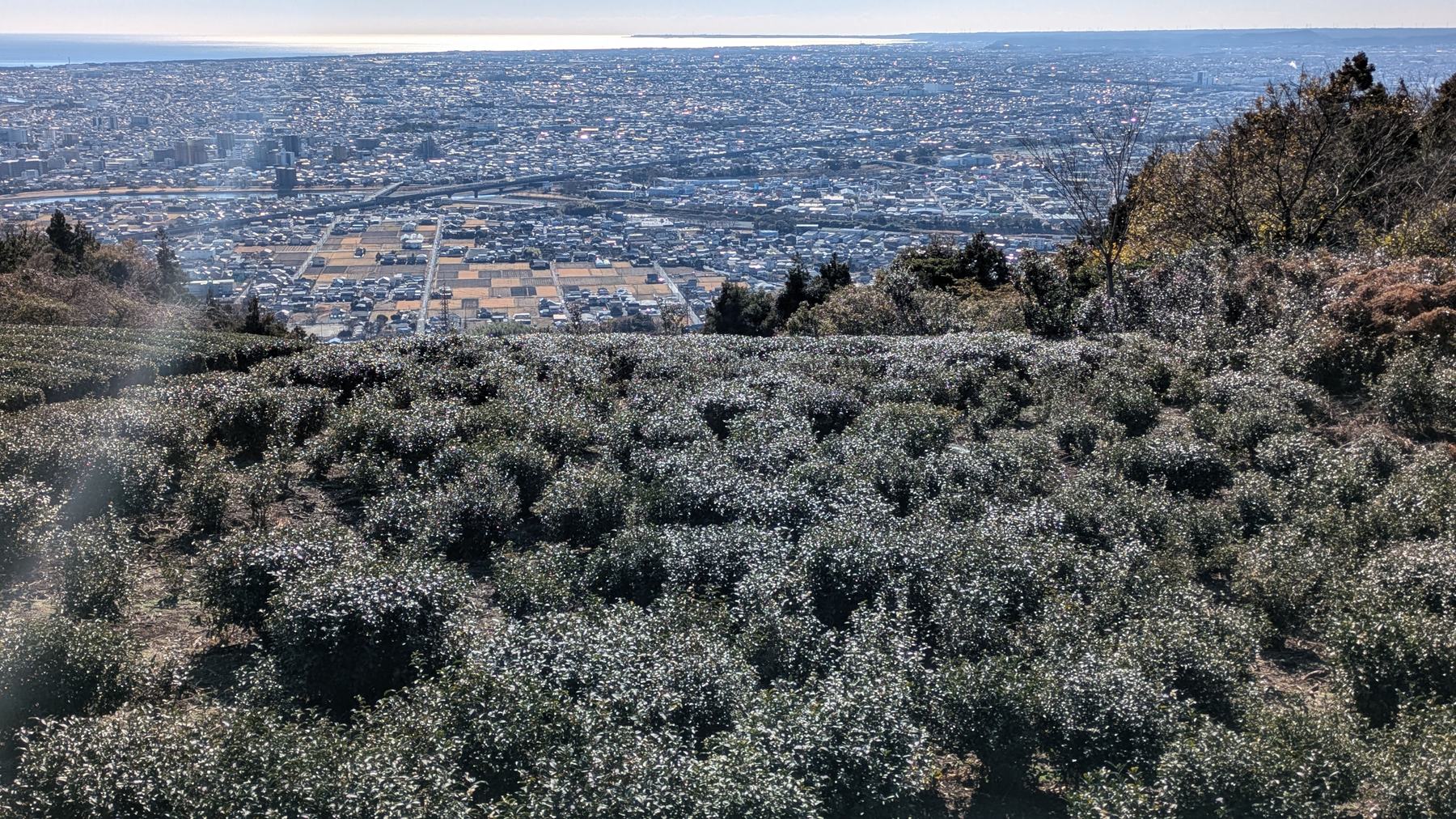
View from a restored tea field on Mount Takakusa over Yaizu town and Suruga Bay, with the Pacific in the distance
scroll
The Hillside

Mount Takakusa, five hundred and one metres.

Mount Takakusa rises above Yaizu City, on the eastern flank of Shizuoka. For generations, the slope was worked for two crops: tea, and Japanese mandarin orange. Today, much of the land is no longer cultivated.

Tea fields planted by farmers in the post-war decades sit overgrown. Shrubs that once rooted deep into the hillside, a hundred and forty years old in places, have stood untended for twenty years or more. The view from those fields — the town below, Suruga Bay, the Pacific past the harbour — is among the finest in Yaizu. Hikers walk up to see it. And what they see, increasingly, is the consequence of an industry retreating.

We are tea merchants in Yaizu. The work of those who came before us had built and held that landscape. We could not let it disappear without trying to do something about a small part of it.

Why we are doing this

A tea merchant’s commitment to the soil above us.

We are tea merchants, not farmers. Our trade for a hundred and fifty years has been to source, blend, and finish tea grown by the hands of others.

The decision to take on these two fields was therefore not a commercial decision. Two small fields, less than 0.4 and 0.6 ares, will not change the books of a 150-year-old tea house. Natural farming — without pesticide, without fertiliser — will not make them efficient.

But as a tea merchant in Yaizu, we could not let the work of the previous generations of farmers vanish quietly under undergrowth. And as someone whose family has lived for five generations within sight of Mount Takakusa, we wanted those who climb the slope for the view — hikers, residents, anyone with an afternoon to spare — to find tea fields still being kept.

That is the modest aim of this work: to keep the land in cultivation, to grow tea on it again without pesticide or fertiliser, and to leave the slope visible as tea fields to anyone who walks up Takakusa.

The East Field · 笛吹段公園前 東の畑

Yabukita, fifty years rooted, twenty years untended.

Approximately 0.4 ares of Yabukita bushes, planted around fifty years ago. The field had fallen out of cultivation in 2018. We began restoration work in March 2021.

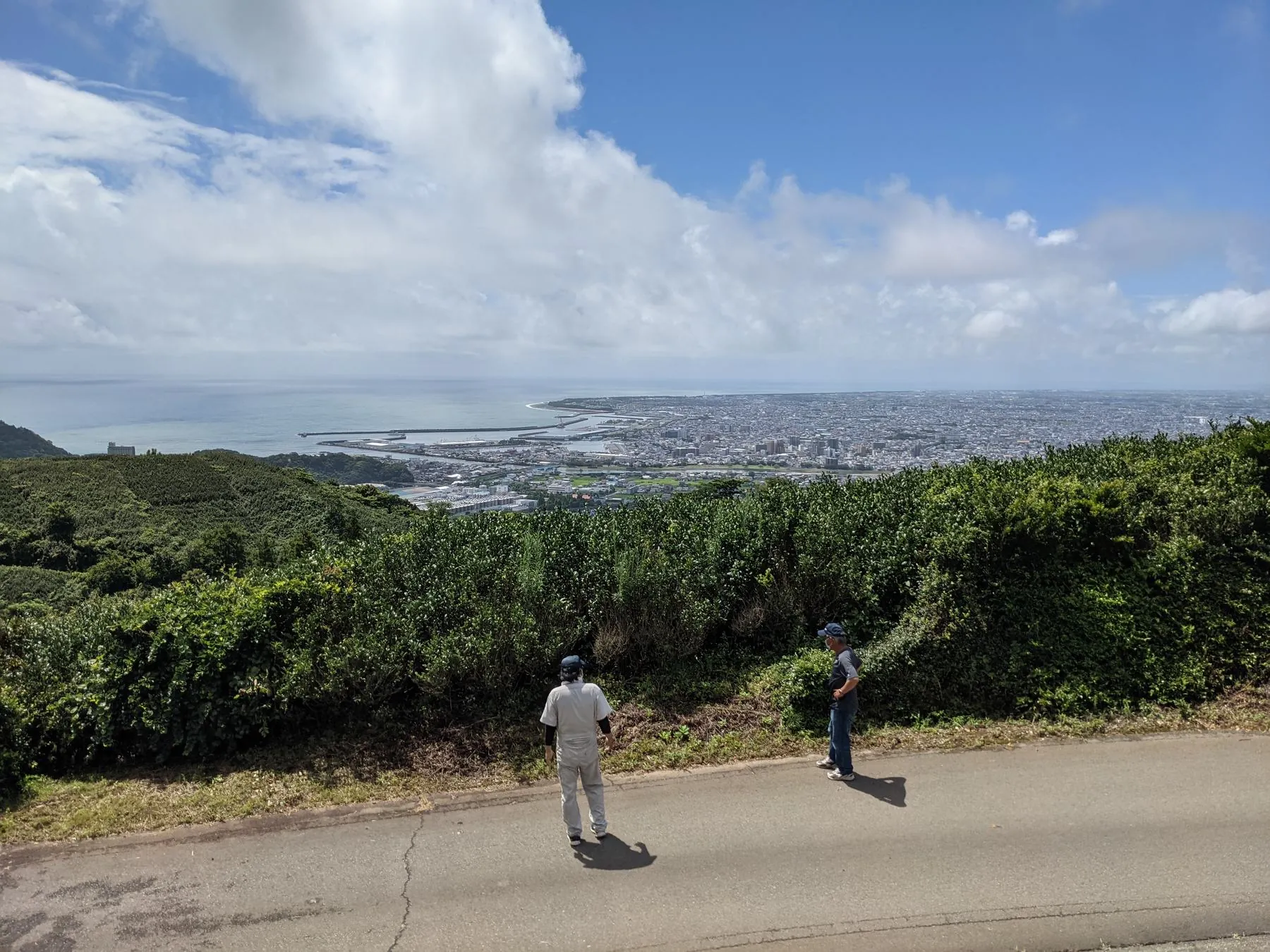
The East Field on Mount Takakusa in August 2021, overgrown after three years without cultivation, with Yaizu town and the Pacific visible below
August 2021 — The view from the field at the start of restoration. Yaizu town, the harbour, and the Pacific in the distance.
Yabukita tea bushes on the East Field in April 2024, fully restored with new spring growth
April 2024 — The field after three full seasons of work. New spring growth on the restored bushes.

The black tea produced from the first restored harvest, in April 2024, was recognised at the Owariasahi Domestic Black Tea Grand Prix the same year — the Special Judge Award and the Owariasahi City Council Chair Award, in the Challenge Division. The official tasting note: aroma, herbaceous; flavour, light, grassy and herbal; liquor, orange-yellow; leaf, pale green.

The West Field · 笛吹段公園前 西の畑

Native cultivar, seedling-grown, over a hundred and forty years old.

Approximately 0.6 ares of zairai — native, seedling-grown tea from the Meiji era, over a hundred and forty years old. The field had been abandoned, by best estimates, for over twenty years. We began restoration work in January 2022.

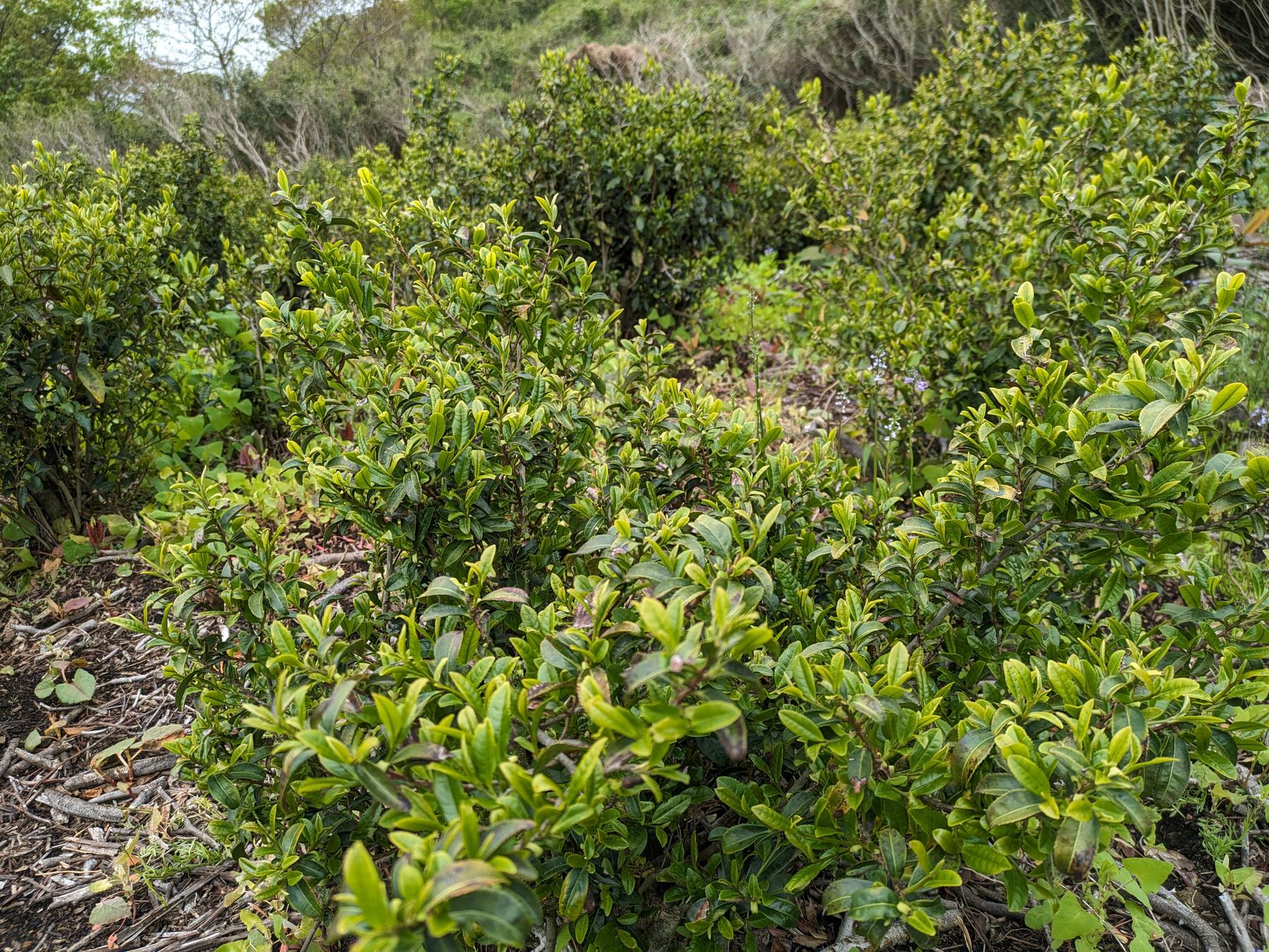
Old zairai tea bushes over 140 years old on the West Field of Mount Takakusa, with thick woody trunks and irregular growth
The native bushes — thick, woody, irregular — carry the genetic diversity of seedling-grown tea from the Meiji era.
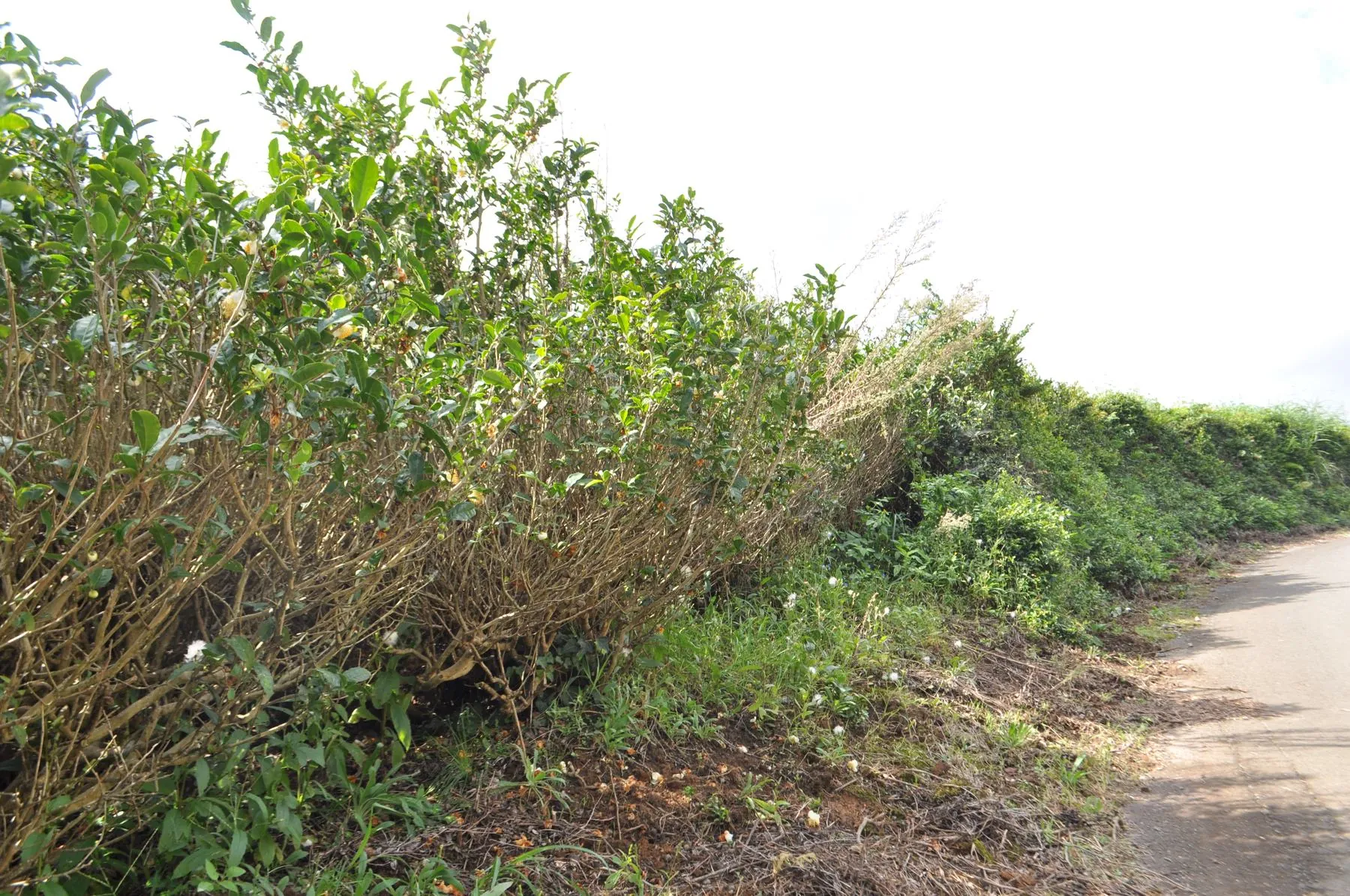
The restored West Field in January 2025, native cultivar tea bushes in winter dormancy with white flowers, Yaizu plain visible below
January 2025 — The native field in winter, white flowers in late bloom, Yaizu plain stretching below to the sea.

Unlike the uniformly cloned Yabukita in the East Field, these are seedling-grown bushes — each one genetically distinct. The leaf is irregular, the harvest small, the work slower. In April 2024 we conducted a small, experimental black tea production from this field. We continue restoration carefully, year by year.

Three expressions of one hillside

Spring, summer, autumn — three teas from Mount Takakusa.

We work the two fields with the seasons, producing a different tea from each phase of the year. Quantities are small. Methods are deliberately modest.

I · Spring

Yabukita 1st Greenish Opus One

Greenish-style black tea, hand-picked first flush, withered.

The first harvest of the year from the restored Yabukita field. Hand-picked young leaves, withered in shallow trays, processed as a greenish-style black tea — closer to a first-flush Darjeeling than to a fully oxidised wakocha. Light, herbaceous, pale liquor.
Recognised: Special Judge Award & Owariasahi City Council Chair Award, Owariasahi Domestic Black Tea Grand Prix 2024 (Challenge Division).

II · Summer

Native Greenish Black Tea

Hand-picked, native-cultivar, experimental small batch.

From the West Field of seedling-grown native bushes. Each season’s production is exploratory: the leaf is irregular, the cultivar character distinct, the volume modest. A black tea that could only come from this hillside — the genetic record of a Meiji-era planting brought back into use.

Status: Limited annual production. Allocation by inquiry.

III · Autumn

Takakusa Bancha

Wood-tub steamed late tea, traditional method.

Autumn-harvested native cultivar leaf, cut along with branches, steamed for forty minutes in a wooden tub until the leaves naturally separate. Machine-dried at 80°C for twenty minutes. The traditional bancha method — thoroughly steamed leaf, low astringency, a clean starch sweetness. Brew in boiling water for five minutes, or simmer in a kettle.

Status: Autumn 2024 production available in small quantities.

CHAZEN · 茶染

The fourth use of the leaf — cloth, then compost, then back to the field.

Tea leaves used to brew tea are not finished. The same leaf, after extraction, can be used to dye cloth — a craft known in Japanese as chazen. Spent dyeing leaves can then be composted. And that compost can be returned to the very fields the leaf came from.

At Mount Takakusa, this is not metaphor. It is the system we work with.

1

Tea leaf

Hand-picked from the restored fields, brewed as black tea or steamed as bancha.

2

CHAZEN dyeing

Spent tea leaf is used to dye natural fibres — soft browns, faint greens, autumnal tones.

3

Compost

The dyeing leaf is then composted, slowly returning to organic matter.

4

Field

The compost is returned to the hillside as the only soil amendment we use.

The fields receive nothing else. No purchased fertiliser, no pesticide. What grew on the slope, returns to the slope. The cycle is small, and slow, and not measured in tonnes per hectare. It is measured in seasons.

Recognition

Owariasahi Domestic Black Tea Grand Prix 2024.

Our Yabukita black tea from the East Field, first restored harvest of April 2024, was recognised in two categories of the Owariasahi Domestic Black Tea Grand Prix the same year.

Award 1 Special Judge Award Challenge Division
Award 2 Owariasahi City Council Chair Award Challenge Division
Entry C-15 · Nagamine Seicha (Shizuoka) Cultivar: Yabukita · Harvest: spring
Tasting note Aroma: herbaceous · Flavour: light, grassy and herbal Liquor: orange-yellow · Leaf: pale green

The Owariasahi Domestic Black Tea Grand Prix is one of Japan’s longest-running competitions for domestically produced black tea, held annually in Owariasahi City, Aichi. Recognition in the Challenge Division is given to teas demonstrating distinctive character or new direction.

For those who climb the slope

The view should still include tea fields.

Mount Takakusa is open to anyone with the time to walk up. Hikers reach the upper slopes year round. From the path past Fuefuki-dan Park, the two fields we keep are visible from the road.

It matters to us that what hikers see, when they reach this height, still includes worked tea fields. Not abandoned ground. Not consequence of an industry leaving. But green rows, kept simply, growing tea.

This is one of the reasons we took on the work. For visitors, for the slope, for the work of those who came before us.

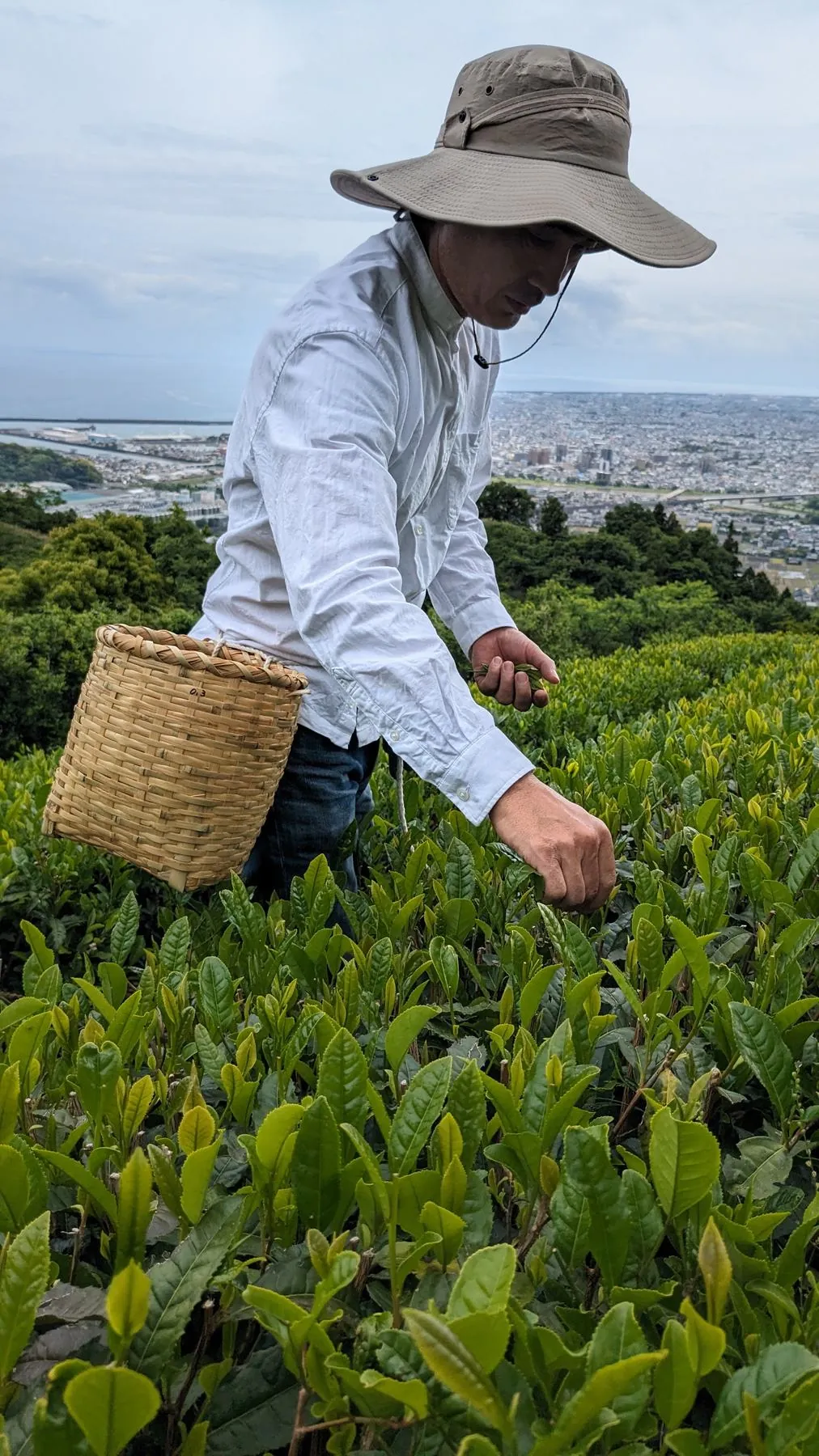
Takayuki Tatara, fifth-generation tea merchant of Nagamine Seicha, hand-picking tea on the restored Yabukita field of Mount Takakusa, with Yaizu town and Suruga Bay visible below
Takayuki Tatara, hand-picking on the restored Yabukita field. Mount Takakusa, May 2024.
The House Behind

Nagamine Seicha, tea merchants since 1876.

Nagamine Seicha is a tea wholesaler in Yaizu, Shizuoka — Japan’s historical tea-finishing capital. Founded in the ninth year of Meiji, we have spent five generations sourcing, blending, and finishing tea by the hands of named producers.

The Takakusa fields are an exception to that work, not a continuation of it. We are tea merchants, not farmers. But standing where we stand, in Yaizu, in this generation, we wanted to do this for these two small fields.

Our wider work in matcha, gyokuro, sencha, and craft sparkling tea continues as before — sourced from named single-producer estates across Shizuoka and Kagoshima, finished in our refining house in Yaizu, shipped to wholesale partners in the United States, Canada, Thailand, and Poland.

For Partners

Specifications for specialty tea merchants and beverage programs.

Production from the Takakusa fields is genuinely small — less than one are of working land between the two sites. Allocation is by inquiry, on a relationship basis. Suited to specialty tea houses, fine-dining beverage programs, natural wine importers, and operators building a non-conventional tea offering with provenance and story.

Origin Mount Takakusa Yaizu City, Shizuoka, Japan
Cultivars Yabukita · Native Seedling-grown, ~140 years old
Cultivation Natural farming No pesticide, no fertiliser
Field area ~ 1 are total East 0.4 ares · West 0.6 ares
Pricing On inquiry FOB Yaizu · quoted by lot
Allocation Relationship Limited annual quantities
Documentation On request COA, residue analysis available
Samples By inquiry For qualified specialty partners
Request samples & allocation →
Begin a conversation

If this work interests you, write to us.

Takakusa tea is small in volume and shaped by the season. We respond to every wholesale inquiry within two business days, Tokyo time.

Wholesale inquiry Tasting kits
Try Takakusa and More

Wild tea joins the Discovery Set.

For partners interested in evaluating the breadth of our house — from Maejima’s gyokuro and Triple Platinum-awarded Tsuyuhikari to wild tea from Mount Takakusa — the Discovery Set ships worldwide for USD 120.

Request a Tasting Kit

日本語版もございます · 高草紅茶 — 高草山の再生茶園より